Protein powder: which kind suits you best?
Protein powder: which kind is best for you?
27 Mar
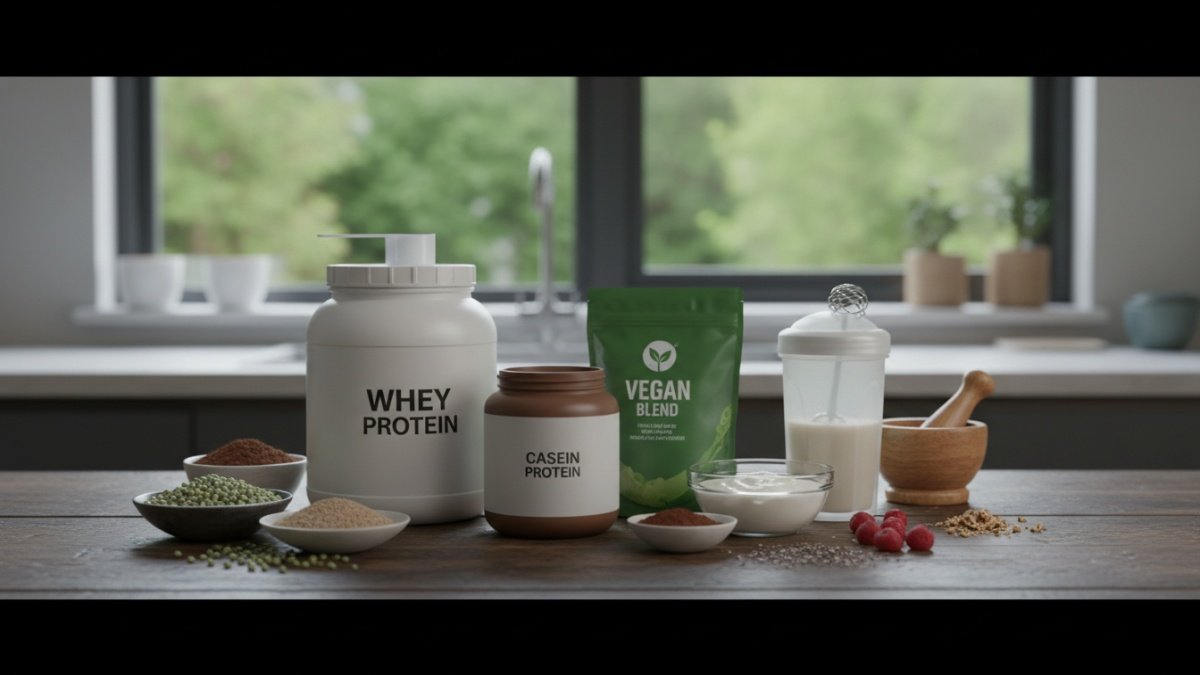
Protein powder is one of the most popular dietary supplements in Sweden, and the range has never been greater. Whey, casein, pea, rice, soy, hemp seed — the list grows every year. The problem? Most buyers choose based on taste and price, without understanding how the different protein sources actually differ in absorption, amino acid profile and biological effect. Here, we compare the most common types, find out what the research says about dosage and timing, and help you identify which type of protein matches your goals — whether it’s muscle growth, weight loss, or everyday nutrition.
Whey protein — why it still dominates the market
Whey is extracted from cow’s milk and is the most studied protein powder in the world. It comes in three main varieties: whey concentrate (WPC, 70-80% protein), whey isolate (WPI, 90-95% protein) and whey hydrolyzate (WPH, enzymatically broken down for faster absorption).
Whey protein’s strength lies in its amino acid profile. It contains high levels of leucine — the amino acid that most effectively triggers muscle protein synthesis (MPS). A 25-gram dose of WPI delivers about 2.5-3 grams of leucine, which is close to the threshold level (2.5 g) required to maximally activate the mTOR signaling pathway that controls muscle building.
What are the differences between whey concentrate, isolate and hydrolyzate?
WPC is the cheapest form and contains more lactose and fat. It suits those who do not have problems with lactose intolerance and do not care about a couple of extra grams of carbohydrates per dose. WPI is practically lactose-free (below 1% lactose) and provides more protein per gram of powder — a better choice for those with sensitive stomachs or those who strictly count macros.
WPH is the fastest absorbed of the three and can reduce stomach upset in sensitive individuals. However, the price difference is significant: WPH often costs 50-100% more per kilogram than WPC, without producing measurably better results in studies comparing muscle protein synthesis at normal meal times. The marginal advantage in absorption rate (15-20 minutes faster) has limited value outside of extreme situations such as double training sessions per day.
All whey variants digest quickly compared to casein — a property that makes them ideal for training sessions but less optimal as a slow source of protein at bedtime, for example.
Casein — the slow protein for nighttime recovery
Casein makes up 80% of the milk protein and has completely different absorption kinetics compared to whey. In the stomach, casein forms a gel that breaks down slowly, providing a prolonged flow of amino acids into the blood for 6–8 hours. This property makes casein a popular choice before bed.
A study published in Medicine & Science in Sports & Exercise (2012) by Res et al. showed that 40 grams of casein taken before bed increased overnight muscle protein synthesis by 22% compared to placebo. The participants were young men who exercised regularly — and the results have since been replicated in several independent studies.
Casein is available as micellar casein (natural form, slowest) and caseinate (processed, slightly faster absorption). Micellar casein is preferable if the goal is the slow release. The taste and texture is thicker and “gritty” compared to whey — something that some people appreciate and others hate. Mixing in Greek yogurt or as a pudding (casein + a little water, stirred until thick consistency) gives a better experience than pure shake.
The price of casein is generally 20-40% higher than whey per kilo. Is it worth it? If you work out in the morning and already get enough protein during the day, casein is a luxury rather than a necessity. However, if you train in the evening and want to maximize nighttime recovery, 40 grams of micellar casein before bed may be one of the most cost-effective investments in your supplement stack.
Plant-based protein — pea, rice, soy and hemp in comparison
The plant-based protein market has exploded in the 2020s, driven by environmental awareness, lactose intolerance and veganism. But does plant protein perform as well as animal protein for muscle building and recovery?
The answer is yes — with caveats. Soy protein isolate has a complete amino acid profile (contains all essential amino acids) and has shown comparable muscle protein synthesis to whey in studies. Pea protein is high in leucine and in a 12-week study published in the Journal of the International Society of Sports Nutrition (2015) showed identical muscle growth to whey in men who trained in strength training.
Rice protein isolate has a lower lysine content but is often combined with pea protein to round out the amino acid profile — a combination that in practice produces an almost identical profile to whey. Hemp protein has the weakest amino acid profile and lowest protein concentration per gram (50-60%), but provides omega-3 fatty acids and fiber.
Here are the most relevant features to compare when choosing plant-based protein:
-
Soy protein isolate — complete amino acid profile, PDCAAS 1.0, mild taste, but contains phytoestrogens (isoflavones) that worry some men, despite meta-analyses showing no negative effect on testosterone at normal doses.
-
Pea protein isolate — high leucine content (8-9% of protein content), PDCAAS 0.89, slightly grainy texture but neutral flavor that works well in smoothies.
-
Rice protein — low in lysine but high in cysteine and methionine, making it an excellent companion to pea protein in combination products.
-
Hemp protein — lowest protein concentration (50-60%) but adds omega-3, fiber and minerals. Best as a supplement, not a primary protein source.
The main disadvantages of plant protein in addition to taste relate to digestibility. Many plant proteins have an earthy, gritty taste that requires more seasoning. Digestibility (measured as PDCAAS) is generally lower: whey isolate has PDCAAS 1.0 (the maximum value), soy protein isolate 0.98–1.0, pea protein 0.89 and rice protein 0.47. By combining peas and rice (usually 70:30) you reach PDCAAS around 0.95 — quite enough.
Protein powder and weight loss — how protein supports fat burning
Protein powder weight loss is a combination that is often misunderstood. The protein itself is not a slimming agent — but it supports weight loss through three documented mechanisms.
The thermic effect of protein is 20-30% of caloric intake, compared to 5-10% for carbohydrates and 0-3% for fat. This means that the body uses more energy to digest and process protein. With a daily protein intake of 150 grams, 120-180 kcal are “lost” in digestion work alone.
Protein provides the strongest feeling of satiety of all macronutrients. A shake with 30 grams of protein can keep hunger at bay for 3-4 hours, making it easier to maintain a calorie deficit without feeling starved between meals. Casein provides longer satiety than whey due to the slower absorption.
Muscle preservation during caloric restriction is the third mechanism and perhaps the most important. In a caloric deficit, the body breaks down both fat and muscle mass — but a high protein intake (1.6–2.2 g/kg body weight) in combination with strength training minimizes muscle loss. Less muscle mass means a lower basal metabolic rate, making future weight gain more likely — the classic yo-yo effect. Read more about how protein and other factors affect metabolism in our guide on how to increase your metabolism.
The dosage for maximum effect? Aim for at least 1.6 grams of protein per kilogram of body weight per day during active weight loss, spread over 3-5 meals with at least 20-30 grams per occasion. Protein powder is a tool to reach that level — not a substitute for protein-rich foods. A typical day might look like this: 30g of protein at breakfast (eggs + yoghurt), 40g at lunch (chicken/fish), 25g as a shake after training, 40g at dinner and possibly 30g of casein before bed. A total of 165 grams — quite possible to reach without every meal requiring a shake.
The quality of the protein powder matters. Third-party tested products (Informed Sport, NSF International) provide security against contamination and incorrect doses. Avoid products with “amino spiking” — a method where cheap amino acids such as glycine and taurine are added to inflate the analyzed protein content without providing the same biological effect as complete proteins. Looking for more ways to optimize your body composition? Our best SARM for the gym guide discusses options for those who want to go the extra mile.
.entry-content