HPLC 98.2% VERIFIED
 View Details
 Novous Labs
Fact sheet for Sema+Cagri Pen 4 + 4 MG: An HPLC-verified performance compound with a verified purity of 99.2% (tested on 2026-02-28). The product contains the active substance Sema+Cagri Pen 4 + 4 MG at a concentration of N/A and comes in a size of 1 unit. Recommended for athletes seeking guaranteed chemical purity and exact dosing.
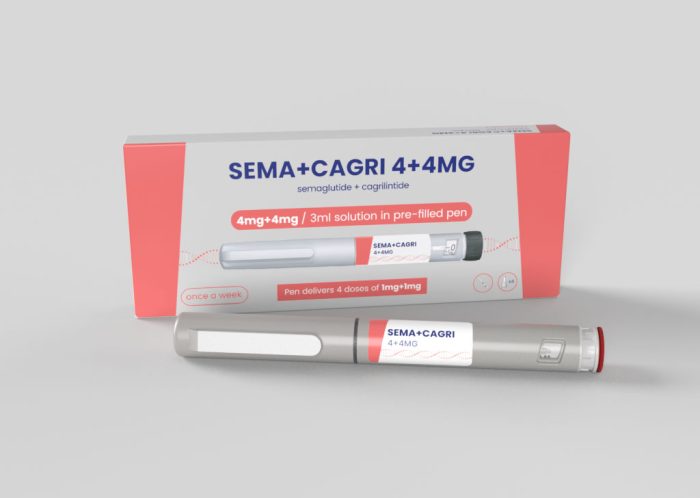
Semacagri is a product name that alludes to CagriSema, a pharmaceutical combination of two separate peptides — semaglutide and cagrilintide — in a single injection formulation. The concept has been de...
Semacagri is a product name that alludes to CagriSema, a pharmaceutical combination of two separate peptides — semaglutide and cagrilintide — in a single injection formulation. The concept has been developed by Novo Nordisk and is one of the most interesting innovations in modern metabolic pharmacology. The two components act via different receptor pathways: semaglutide is a GLP-1 receptor agonist, while cagrilintide is a long-acting analogue of amylin, a pancreatic hormone that, together with insulin, is released from the beta cells after a meal. The dual mechanism aims to enhance the effect on appetite, satiety and weight reduction beyond what either component provides alone.
Semaglutide was first approved in 2017 (Ozempic for type 2 diabetes) and 2021 (Wegovy for obesity). Cagrilintide is a structural modification of endogenous amylin with fatty acid modification for extended half-life to approximately one week, allowing for weekly administration. The combination is currently being evaluated in the phase 3 program REDEFINE for the indication obesity. Preliminary phase 2 results showed more pronounced weight loss than semaglutide or cagrilintide as monotherapy, and phase 3 data are expected to establish the combination's place in the clinical arsenal.
Presentation 4.4 mg corresponds to a total pharmaceutical concentration in the pen. Actual weekly dose during treatment in ongoing studies is lower and is titrated up gradually to reduce gastrointestinal side effects during the initial phase.
The dual active substance exerts its effect via two separate but complementary mechanisms. Semaglutide binds selectively to the GLP-1 receptor, a G protein-coupled receptor expressed on pancreatic beta cells, alpha cells, gastric parietal cells and several centers in the brain. The activation produces glucose-dependent insulin secretion, suppressed glucagon secretion, delayed gastric emptying and a central effect on the appetite centers in the hypothalamus and brainstem.
Cagrilintide binds to the amylin receptor complex, which consists of the calcitonin receptor in combination with RAMP proteins (receptor activity-modifying proteins). The central site of action is in the area postrema and in the nucleus tractus solitarii, where activation provides a distinct satiety signal that potentiates GLP-1-mediated satiety. The amylin receptor also modulates dopaminergic reward pathways in ways that suppress appetite, a phenomenon described in preclinical research in both rodent models and primates.
The additive effect of the two components has been documented in phase 2 studies: the combination produces greater weight reduction than semaglutide alone or cagrilintide alone, a finding suggesting that the two receptor pathways act synergistically rather than simply in parallel. Plasma half-lives are comparable — approximately one week for both components — providing a coordinated pharmacokinetic profile with weekly administration.
In available pharmacological literature from the development programs for semaglutide and cagrilintide, as well as from published phase 2 data for the combination, several physiological systems reappear where the substances leave clear imprints:
The side effect profile of the combination is still under evaluation in ongoing phase 3 studies, but the main risks are well known from the profiles of the individual components. The dominant group is gastrointestinal side effects, which are often more pronounced with combination therapy than with monotherapy with either substance.
The overall side effect picture of the Semacagri-type combination — gastrointestinal effects, rare but serious reactions in the pancreas and biliary tract, and a theoretical C-cell tumor risk — means that clinical use is based on close monitoring of symptoms, weight development and relevant laboratory parameters (HbA1c, lipid status, liver and kidney function).
Very satisfied. Fast handling and good prices.
Translated from SwedishTried many different brands but this is absolutely top class.
Translated from SwedishWill order more soon. Reassuring with independent HPLC analyses.
Translated from SwedishExcellent support and fast delivery straight to the mailbox.
Translated from SwedishFast shipping and a discreet envelope. Good quality product.
Translated from Swedish View Details  View Details
  View Details
  View Details