HPLC 98.7% VERIFIED
 View Details
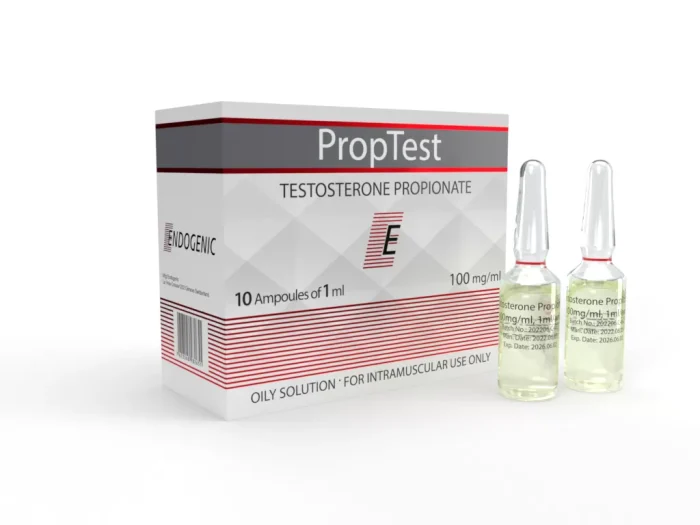
 Fact sheet for Endogenic PropTest Testosteron Propionat: An HPLC-verified performance compound with a verified purity of 99.1% (tested on 2026-04-11). The product contains the active substance Endogenic PropTest Testosteron Propionat at a concentration of N/A and comes in a size of 1 unit. Recommended for athletes seeking guaranteed chemical purity and exact dosing.
Testosterone propionate is a short-acting ester of testosterone, the body's most important androgen. The molecule consists of testosterone with a three-carbon propionic acid chain esterified at the 17...
Testosterone propionate is a short-acting ester of testosterone, the body's most important androgen. The molecule consists of testosterone with a three-carbon propionic acid chain esterified at the 17β position. The short chain gives the preparation low lipophilicity compared to other esters, which means rapid release from the injection depot and a half-life of around 0.8–2 days. The short exposure requires frequent administration frequency to keep the serum level stable, but at the same time provides a more controllable pharmacokinetic without a long-term residual effect upon withdrawal.
Testosterone propionate was the first testosterone ester to be synthesized and introduced commercially — Schering registered the preparation in Germany in 1937 under the trade name Testoviron. The original indication was replacement therapy in male hypogonadism, a use that still persists today in several countries. Other historical indications included delayed puberty in boys, certain anemias, and palliative hormone therapy for metastatic breast cancer in postmenopausal women. The ester's short duration of action also made it the first choice in early endocrinological studies of androgen replacement, as the serum level could be quickly adjusted in case of side effects.
Testosterone is the reference molecule in pharmacological literature — anabolic and androgenic effects are set at 100:100 and all derivatives are compared against this. Active substance after hydrolysis is the same free testosterone as with other testosterone preparations; the difference lies exclusively in the pharmacokinetics.
After intramuscular injection, an oil depot is formed from which testosterone propionate quickly diffuses out. Plasma esterases hydrolyze the ester bond and free testosterone is released into the blood, where it is distributed between SHBG, albumin and a biologically active free fraction of approximately 1–3 percent. The pharmacokinetic profile of the short ester gives a pronounced peak in serum within the first day and a faster decay than with long-acting esters.
Free testosterone binds to the androgen receptor (AR) in target cells, forms a ligand-receptor complex and is transported to the cell nucleus, where it directs the transcription of genes linked to protein synthesis and differentiation of androgen-sensitive tissues. In tissues rich in 5α-reductase — skin, prostate, hair follicles, parts of the central nervous system — testosterone is converted to dihydrotestosterone (DHT), the most powerful endogenous androgen. The aromatase enzyme simultaneously converts a fraction to estradiol, which has an independent physiological role in lipid regulation, bone mineralization and central libido centers.
The short half-life provides a more pulsatile exposure than enanthate or cypionate esters. Negative feedback to the hypothalamus and pituitary gland reduces the release of GnRH as well as LH and FSH, which when given exogenously suppresses the endogenous production and spermatogenesis. Recovery after withdrawal starts faster than with long-acting esters because serum levels fall more quickly.
Since the final molecule is free testosterone, the physiological effects of the propionate ester correspond to those of other testosterone preparations. In pharmacological literature from decades of substitution therapy, several systems reappear where the substance shows clear imprints:
The side effect profile of testosterone propionate basically corresponds to that of other testosterone esters, since the final molecule is the same. What differentiates the profile is the pharmacokinetics: the short half-life results in a faster peak and decay of each dose, which may produce more pronounced fluctuations in estradiol and mood between injections. Frequent administration also adds risk of local irritation at the injection site.
The overall side effect picture of testosterone propionate — estrogenic influence, hematological and cardiovascular shifts, suppression of own hormone production — requires, in clinical use, regular laboratory controls (total and free testosterone, estradiol, hematocrit, lipid status) and an individual assessment of the risk-benefit balance.
You can tell it's the real deal and correctly dosed. Strength goes up every week.
Translated from SwedishExcellent support and fast delivery straight to the mailbox.
Translated from SwedishHigh purity and good bioavailability. The lab report matched the effect well.
Translated from SwedishVery satisfied. Fast handling and good prices.
Translated from SwedishMinimal side effects and good gains. Top marks.
Translated from Swedish View Details  View Details
  View Details
  View Details