HPLC 98.7% VERIFIED
 View Details
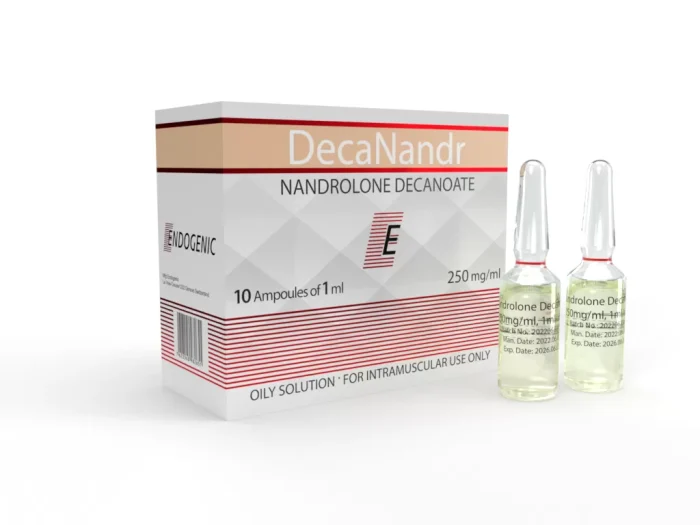
 Fact sheet for Endogenic DecaNandr Nandrolone Decaonate: An HPLC-verified performance compound with a verified purity of 97.9% (tested on 2026-02-15). The product contains the active substance Endogenic DecaNandr Nandrolone Decaonate at a concentration of N/A and comes in a size of 1 unit. Recommended for athletes seeking guaranteed chemical purity and exact dosing.
Nandrolone decanoate (chemically 19-nortestosterone undecanoate) is a long-acting ester of nandrolone. Structurally, the molecule differs from testosterone in that the methyl group at carbon-19 is mis...
Nandrolone decanoate (chemically 19-nortestosterone undecanoate) is a long-acting ester of nandrolone. Structurally, the molecule differs from testosterone in that the methyl group at carbon-19 is missing — a seemingly small difference that changes how the substance behaves in different tissues and that explains why nandrolone has been treated for decades as its own pharmacological class rather than as a variant of testosterone.
The substance was synthesized in the 1950s and shortly thereafter introduced into clinical use, best known under the trade name Deca-Durabolin from Organon. The breadth of the original indications says something about how the substance was perceived: aplastic anemia, anemia in chronic renal failure, postmenopausal osteoporosis, cachexia in HIV/AIDS and severe malnutrition after major surgical interventions. The list of indications has shrunk considerably since then, but in several countries nandrolone decanoate still retains the status of a registered medicinal product.
The decanoate ester, with its ten carbon long fatty acid chain from decanoic acid (capric acid), gives the preparation its characteristic and very extended profile. The half-life is around 6–12 days and traces of metabolites can be detected in analyzes long after the supply has ceased.
On a cellular level, nandrolone works in the same way as testosterone. The molecule finds its way to the androgen receptor (AR) inside the target cell, forms a ligand-receptor complex and moves into the cell nucleus, where it controls the expression of genes linked to protein synthesis and tissue building.
The interesting thing happens in the tissues that are rich in the enzyme 5α-reductase — that is, the skin, the prostate and the hair follicles. Testosterone is converted there to dihydrotestosterone (DHT), a more powerful androgen. Nandrolone follows the same metabolic pathway, but the end product is dihydronandrolone, a compound with significantly weaker binding to the AR than the original molecule. The entire beneficial ratio of anabolic to androgenic activity — often stated in the literature to be approximately 125:37, with testosterone as a reference of 100:100 — is rooted in this metabolic difference.
Nandrolone decanoate also aromatizes to estradiol, but about five times more slowly than testosterone. Another often overlooked feature: the molecule binds measurably to the progesterone receptor. This is not a minor detail. The progestagen activity is precisely what makes the prolactin effect appear in the side effect profile, something you don't see with pure androgens.
In the pharmacological literature and in clinical data from the period when nandrolone was widely used, several physiological systems appear where the substance leaves a clear imprint:
The side effect profile of nandrolone decanoate is among the better mapped within the anabolic steroid class, with data from both the clinical period of use and later epidemiological research. The long half-life gives a specific consequence: some effects persist long after the supply has ceased, which must be taken into account when comparing nandrolone decanoate with short-acting esters.
The overall picture of nandrolone decanoate — hormonal influence over months, cardiovascular burden, hematological shifts and psychological effects — means that clinical use requires medical follow-up with regular laboratory tests (lipid status, blood count, liver enzymes, hormone panel) and an individual assessment of the risk-benefit balance.
Fast delivery and professional service on Telegram. Will keep shopping here.
Translated from SwedishHigh purity and good bioavailability. The lab report matched the effect well.
Translated from SwedishBest injectable I've run in a long time. Will definitely buy again.
Translated from SwedishWill order more soon. Reassuring with independent HPLC analyses.
Translated from SwedishAwesome pumps at the gym now. No pain (PIP) at all after injection.
Translated from Swedish View Details  View Details
  View Details
  View Details