Muscle loss during GLP-1 treatment: this is how you preserve muscle mass
May 13
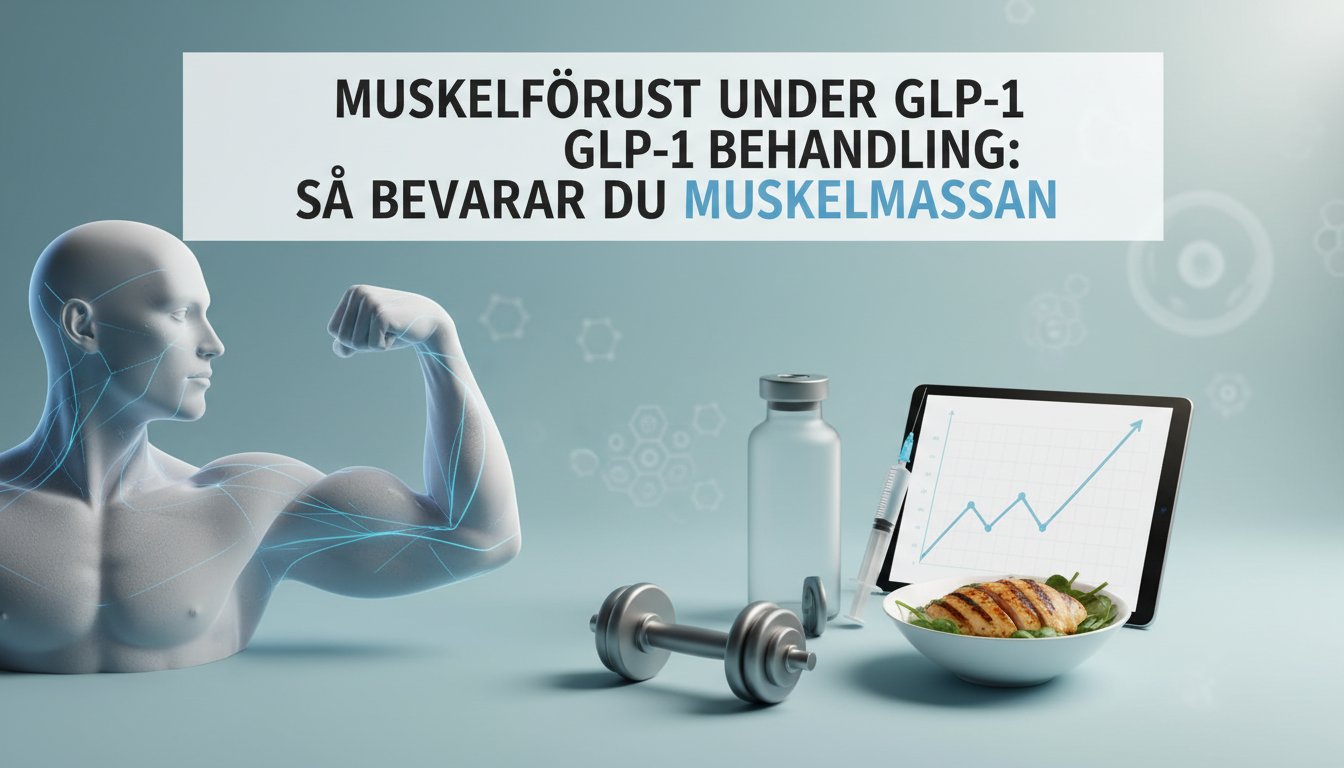
GLP-1 receptor agonists such as semaglutide and tirzepatide produce impressive weight loss — but a significant portion of the weight lost comes from muscle tissue, not just fat. Data from the STEP 1 study (2021, NEJM, n=1,961) show that participants treated with semaglutide lost an average of 14.9% of body weight, of which an estimated 25-40% was muscle mass. Muscle loss glp-1 is therefore not a side effect you can ignore — it affects metabolism, strength and long-term weight stability.
The loss of lean mass is not inevitable. With the right training and nutrition strategy, it is possible to maintain — and in many cases build — muscles in parallel with the reduction of fat tissue. It’s about understanding the mechanisms and acting consciously from day one of the treatment.
Medical review: The articles in this category are reviewed by accredited clinics specializing in endocrinology and sports medicine. Always consult your attending physician before starting or changing a GLP-1 treatment or an exercise regimen.
—
Why GLP-1 treatment increases the risk of muscle loss
GLP-1 agonists greatly reduce appetite, which easily leads to insufficient protein intake and negative energy balance — two factors that drive catabolism in muscle.
When calorie intake drops rapidly, the body signals that energy needs to be drawn from stored sources. The fat stores are the primary target, but without sufficient training and nutritional stimulation, muscle protein is also broken down for gluconeogenesis. The problem is compounded by the fact that GLP-1 drugs slow gastric emptying and reduce feelings of hunger — making it difficult to achieve adequate protein intake when you’re simply not hungry.
The SUSTAIN 6 study (2016, NEJM, n=3,297) showed that semaglutide significantly reduced cardiovascular events, but the report did not specifically address muscle mass changes. Later analyzes using DEXA measurements, including from SURMOUNT-1 (2022, NEJM, n=2,539) with tirzepatid, confirmed that without active intervention, participants lost muscle mass proportional to weight loss.
Age and starting weight matter. Older individuals and those with sarcopenia at baseline are at greatest risk. The body is also more sensitive to protein catabolism under severe caloric restriction, which means that the rate of weight loss directly affects how much muscle tissue is preserved — slower weight loss with conscious nutritional control results in better lean mass outcomes.
—
Protein requirements and macro-composition during GLP-1 regimen
Protein intake is the single most important nutritional variable for preserving lean mass during GLP-1 treatment — recommended intake is 1.6–2.2 g per kg of body weight per day.
How much protein do you actually need?
General dietary recommendations of 0.8 g/kg are not sufficient when the body is in a catabolic state driven by caloric restriction. Research compiled in the ATTAIN protocol and supported by data from the ACHIEVE cohort points to 1.6-2.2g per kg of body weight being the range that consistently protects muscle mass during active weight loss. For a 90 kg person, that means 144-198 g of protein daily — an amount that requires active planning when appetite is reduced.
Spread the intake evenly over 3-4 meals to maximize muscle protein synthesis. Each target should contain at least 25–40 g of protein to sufficiently activate mTOR signaling. Leucine-rich sources such as eggs, chicken, quark and whey protein are preferred because leucine acts as a direct trigger for protein synthesis.
Table: Macro composition per day at 1,800 kcal
| Macronutrient | Gram | Calories | Share |
|---|
|Protein (2 g/kg, 90 kg)|180 g|720 calories| 40 % |
|Carbohydrates|158 g|630 calories| 35 % |
|Fat|50 g|450 calories| 25 % |
Carbohydrates should be prioritized around training sessions to enable optimal performance and recovery. Fat is kept in moderation but does not need to be drastically restricted — essential fatty acids are important for hormone function during a period of calorie restriction. A vegan diet can achieve the same protein goals but requires more planning around leucine content and total amino acid profile.
—
Strength training during GLP-1 treatment: weekly plan and training regimen
Progressive strength training 2-4 times per week is the most effective intervention for preserving and building muscle mass in parallel with GLP-1-medicated weight loss.
Training schedule: 3-day full-body workout
| Exercise | Set | Rep | RPE | Rest |
|---|
|Squat (or goblet squat)| 3 | 8–10 | 7–8 |90 sec|
|Romanian deadlift| 3 | 8–10 | 7–8 |90 sec|
|Rowing with barbell or machine| 3 | 8–12 | 7 |75 sec|
|Bench press or push-up variant| 3 | 8–12 | 7 |75 sec|
|Standing shoulder press| 2 | 10–12 | 6–7 |60 sec|
|Bicep curl + tricep press superset| 2 | 12–15 | 6 |60 sec|
|The plank| 2 |30–45 sec| — |45 sec|
RPE (Rate of Perceived Exertion) on a scale of 1-10. RPE 7 means you could do 3 more reps. RPE 8 means 2 reps in reserve.
Three sessions per week with at least one rest day in between is a sustainable starting schedule. Strength training glp-1 doesn’t have to be extreme to produce results — consistency and progressive overload outweigh volume in this context.
Progression schedule week 1–8
Progressive overload is the basic principle. Increase the load gradually:
-
Weeks 1–2: Focus on technology. Choose weights you can handle with RPE 6–7.
-
Week 3-4: Add 2.5-5 kg to the base exercises as you consistently reach the upper rep limit.
-
Weeks 5–6: Increase the volume with an extra set of squats and rows if recovery allows.
-
Week 7-8: Introduce a deload week with 50-60% of normal weight to allow the body to adapt.
The Protein wegovy protocol (a clinical term for combining Wegovy treatment with optimized protein intake and strength training) recommends scheduling exercise 2-4 hours after a protein-rich meal to maximize muscle protein synthesis.
—
Recovery and the role of sleep for lean mass
Under calorie restriction, recovery takes longer — sleep, stress management and active rest are not optional extras but functional requirements to preserve muscle mass.
Lack of sleep for less than 7 hours per night increases cortisol secretion and slows down protein synthesis. A study published in the Annals of Internal Medicine found that participants who slept 5.5 hours a night lost twice as much muscle mass during weight loss compared to those who slept 8.5 hours — despite an identical calorie deficit. During GLP-1 treatment, where the body is already dealing with a metabolic adjustment, this effect is further enhanced.
Active recovery in the form of walking, light mobility training and stretching keeps the blood circulation going without straining the muscle tissue. Aim for 7,000-10,000 steps daily on rest days — it supports insulin sensitivity and fat oxidation without competing with muscle recovery.
Creatine is the only dietary supplement with robust evidence for muscle mass preservation during caloric restriction. 3–5 g per day is the clinically studied dose and is not classified as doping in the context of Swedish sports. Retaining Muscle Ozempic’s combination of creatine and strength training is one of the most evidence-based protocols available today.
Stress management is underrated. Chronic stress elevates cortisol, which in combination with GLP-1-driven calorie-restrictive eating creates a doubly catabolic environment. Mindfulness, controlled breathing and scheduled recovery days are practical tools rather than luxuries.
—
Common mistakes that accelerate muscle loss during GLP-1 treatment
Many who combine GLP-1 drugs with exercise make well-intentioned but counterproductive choices — the mistakes are predictable and avoidable with the right information.
The most common mistake is to focus exclusively on cardio. Running, cycling and swimming burn calories and improve cardiovascular health, but without mechanical tension in the muscles, the strongest signal for protein synthesis is missing. Cardio training is valuable as an adjunct — not as the primary strategy — for preserving lean mass.
Skipping meals to “accelerate” weight loss is another common problem. GLP-1 drugs suppress hunger so effectively that it may feel rational to eat as little as possible. However, too severe a caloric deficit, below 1,200 kcal for women and 1,500 kcal for men without medical supervision, risks triggering adaptive thermogenesis and accelerated muscle catabolism.
Additional mistakes to avoid:
-
Ignore sleep quality even though calorie restriction increases the need for recovery
-
Train at too high an RPE (9-10) every session without periodization — it delays recovery and increases the risk of injury
-
Change the training program every two weeks and lose the progressive overload effect
-
Forget to adjust protein goals when weight changes — recalculate every 4-6 weeks
-
Rely on protein bars with high sugar content as primary protein source
Regular follow-up with DEXA scanning, or at least bioimpedance measurement, provides concrete data on changes in lean mass. Without measurement, it is difficult to know if the strategy is working.
—
Frequently asked questions about muscle loss and GLP-1
How much muscle mass is normal to lose during GLP-1 treatment? Without active intervention, most people lose 25-40% of total weight loss as muscle mass. With strength training and adequate protein intake, it is possible to reduce this figure to below 10–15%. Exact results vary depending on age, starting weight and exercise habits.
Can you build muscle while taking Ozempic or Wegovy? Yes, it is possible for untrained individuals to experience so-called “body recomposition” — loss of fat and increase in muscle mass simultaneously. Well-trained individuals should have realistic expectations and prioritize preserving existing muscle mass rather than expecting large muscle gains during the course of treatment.
How soon should one start strength training after starting GLP-1 treatment? From day one if possible. The earlier strength training is integrated, the better the protection against muscle loss during the initial period of severe weight loss. Start easy and focus on technique for the first few weeks as the body adjusts to the medication.
Is creatine safe to take during GLP-1 treatment? Creatine is a well-studied and generally safe dietary supplement. There are no known adverse interactions with semaglutide or tirzepatide. Consult your doctor if you are taking other medications or have kidney problems, as creatine is filtered through the kidneys.
What happens to the muscles if you stop taking GLP-1 drugs? Weight regain is common after discontinuation. If the muscle mass was preserved during the treatment period, the starting position is better for managing the weight gain. Continued strength training and protein intake are essential to minimize negative changes in body composition after treatment.
Is 2 training sessions per week enough? Two sessions per week provide a measurable effect on muscle mass preservation and is a realistic minimum. Three sessions give noticeably better results. Four sessions or more increases the benefits further but also requires more focus on recovery, sleep quality and nutrition to avoid being counterproductive.
.entry-content