Low-calorie foods: 30 filling foods with few calories
23 Mar
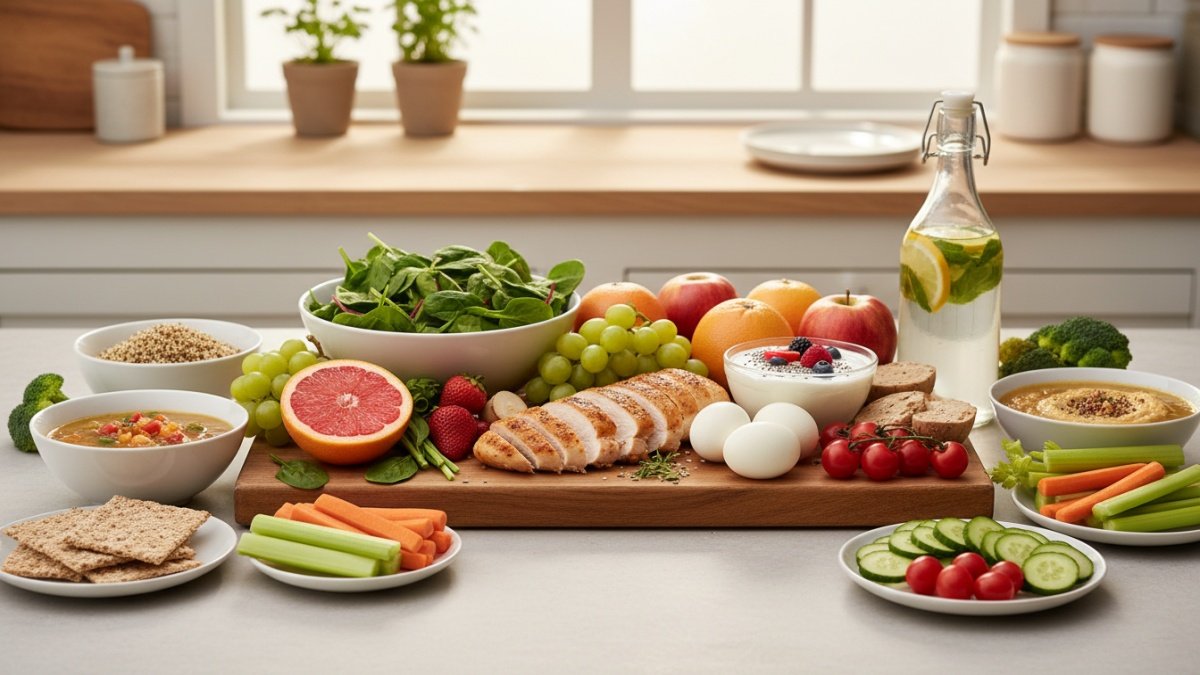
Low-calorie food does not have to mean boring food. The most common misconception about dieting is that it automatically means small portions and constant hunger — but in reality it’s about choosing foods with low energy density and high satiety. One kilogram of cucumber contains 160 kcal. A kilo of chocolate contains 5,400 kcal. The volume of food you eat affects satiety at least as much as the actual calorie content. Here we list 30 low-calorie foods that actually fill you up, distributed among vegetables, protein-rich foods, fruit and smart snacks in 2026.
Vegetables with extremely low calorie content — the basis of every slimming diet
Vegetables are the backbone of a low-calorie diet. Most vegetables contain 15-45 kcal per 100 grams, while supplying fiber, water and micronutrients that keep you full without breaking your calorie budget.
Here are 10 vegetables that provide the most satiety per calorie:
-
Cucumber — 16 kcal/100 g, 95% water. Perfect as a snack, in salads or as a base in chilled soups. Do not peel off the peel — it contains fiber and some vitamin K.
-
Celery — 14 kcal/100 g. The classic “negative calorie food” (the myth that the body uses more calories to digest it is not true, but the margin is minimal).
-
Spinach — 23 kcal/100 g raw, but shrinks considerably when cooked. Rich in iron, folate and magnesium. Works in smoothies, omelets and as a base in salads.
-
Zucchini — 17 kcal/100 g. Spiralized like “zoodles”, it replaces pasta with a fraction of the calories and surprisingly good texture.
-
Cauliflower — 25 kcal/100 g. Extremely versatile: grated as “cauliflower rice” (50 kcal per portion vs 200 kcal for regular rice), roasted in the oven or blended into puree as a side dish.
-
Broccoli — 34 kcal/100 g. High fiber and protein content relative to other vegetables (2.8 g protein/100 g). Steamed for 3–4 minutes, it retains its crunch and nutrition.
-
Tomatoes — 18 kcal/100 g. Rich in lycopene (an antioxidant), especially when cooked. Cherry tomatoes are perfect low-calorie snacks to keep in the fridge.
-
Bell pepper (red) — 31 kcal/100 g. Contains more vitamin C per gram than orange. Sötman makes it a favorite among children and adults as a snack.
-
Radish — 16 kcal/100 g. Gives crunch and peppery taste in salads. Roasted in the oven, they become mild and sweet — an underrated side dish.
-
Mushroom (mushroom) — 22 kcal/100 g. Provides umami flavor that can replace part of the meat in dishes without increasing the calories. Fried in a little olive oil with garlic, mushrooms become a satisfying topping.
What these vegetables have in common is that they have a high water content (85–95%) and a relatively high fiber content. This combination activates the stretch receptors in the stomach, which signal satiety to the brain via the vagus nerve — an effect that is independent of calorie content. Researcher Barbara Rolls at Penn State University has studied this phenomenon for decades under the heading of “volumetrics” and has shown that people tend to eat about the same weight of food per day regardless of calorie density. By lowering the energy density of the food, you can therefore reduce the calorie intake by 20-30% without reducing the portion size.
The cooking method affects the satiety. Raw vegetables require more chewing and take longer to eat, giving the brain time to register satiety. Steamed vegetables retain more fiber and nutrients than those cooked in water (where water-soluble vitamins are leached out). Roasted vegetables in the oven develop deeper flavors through the Maillard reaction and can make diet foods actually taste good — not just “acceptable.”
Protein-rich foods that satiate without costing calories
Protein is the macronutrient that gives the strongest feeling of satiety per calorie. A portion of chicken breast (150 g) delivers 46 grams of protein at just 165 kcal — compared to 150 g of pasta that provides 8 grams of protein at 230 kcal. The difference in saturation is dramatic.
|Food|Calories/100 g|Protein/100 g|Saturation index (relative)|
|Chicken breast (skinless)|110 calories|31 g|Very high|
|Prawns (boiled)|85 calories|20 g|High|
|Cod/sei/haddock|80–90 kcal|18–20 g|High|
|Egg (boiled)|155 calories|13 g|Very high|
|Cottage cheese (0.2% fat)|65 calories|12 g|High|
|Cottage cheese (4%)|98 calories|11 g|High|
|Turkish yogurt (0%)|59 calories|10 g|Medium–high|
|Tuna (canned in water)|110 calories|26 g|Very high|
|Turkey breast|104 calories|24 g|Very high|
|Tofu (firm)|76 calories|8 g|Means|
Curd and cottage cheese deserve extra attention as filling foods with few calories. A bowl of quark (200 g) with berries and a tablespoon of oat flakes provides 24 grams of protein for under 200 kcal — a snack or breakfast that keeps hunger at bay for 3-4 hours. Do you want to understand how protein and other factors affect your metabolism? Read our guide on how to increase your metabolism.
Fruit and low-calorie snacks that do not sabotage the calorie budget
Fruit sometimes gets a bad rap in the dieting context because of its natural sugar content. But compared to processed snacks, fruit is a superior alternative: high fiber, high water content and micronutrients that are completely missing in a chocolate bar.
Which fruits have the fewest calories per serving?
Watermelon tops the list with 30 kcal per 100 grams and a water content of 92%. A substantial slice (200 g) provides 60 kcal and a tangible feeling of satiety thanks to the volume. Strawberries (32 kcal/100 g), raspberries (36 kcal/100 g) and blueberries (57 kcal/100 g) are compact options that work well as a topping for quark, yoghurt or oatmeal.
Grapefruit (42 kcal/100 g) has been shown in a study by the Scripps Clinic (2006) to produce an average weight loss of 1.6 kg over 12 weeks without other dietary changes — possibly by influencing insulin levels, although the mechanism is not fully understood. Apples (52 kcal/100 g) also deserve a mention: the pectin in apple skins forms a gel in the gut that slows down digestion and prolongs satiety. A whole apple is also significantly more satiating than the equivalent amount of apple juice — fiber and chewing resistance make all the difference.
These combinations work as low-calorie snacks between meals:
-
Carrots + hummus (2 tablespoons) — about 100 kcal, high fiber and protein.
-
Apple + 1 tablespoon of peanut butter — about 160 kcal, a combination of fiber and fat that provides prolonged satiety.
-
Rice or corn cakes (2 pcs) + cottage cheese — about 120 kcal, quick to prepare.
All snacks stay below 160 kcal per serving and provide satiety that lasts for 2-3 hours — enough to bridge the gap between lunch and dinner without triggering overconsumption at the main meal.
This is how you put together a low-calorie day without going hungry
Combining low-calorie foods strategically throughout the day makes the difference between a diet that works and one that leads to tired driving after two weeks. The key is to maximize volume at each meal and place protein at each meal.
An example day that lands around 1,500 kcal with high saturation might look like this: breakfast with quark, berries and oatmeal (250 kcal), lunch with chicken breast, large vegetable salad and quinoa (450 kcal), snack with carrots and hummus (100 kcal), dinner with salmon fillet, roasted cauliflower and sweet potato (500 kcal) and evening snack with Turkish yogurt and raspberries (150 kcal). A total of 1,450 kcal with over 120 grams of protein and enough fiber to keep hunger at bay.
Preparing food in advance (meal prep) on Sundays reduces the risk of impulsive choices during the week. Precook vegetables, grill chicken breasts in batches, and portion out snacks in cans — it takes 60-90 minutes and saves time every day. Studies on behavioral economics show that the simplest choice usually wins: if the low-calorie food is already ready in the fridge, most people choose it over cooking something new or ordering food home.
The portion size of vegetables should never be limited when in a caloric deficit. Filling half the plate with vegetables at each main meal increases volume without significantly affecting the total caloric budget — a strategy that, in Barbara Roll’s research, was found to reduce total caloric intake by 200–400 kcal per day without perceived deprivation. It’s a simple habit that makes a big difference, especially for those who struggle with satiety during a longer dieting period. Do you want to start with a structured weight loss plan? Check out our guide on how to lose weight fast and safely.
.entry-content