Food before and after GLP-1 injection: to minimize nausea
May 24
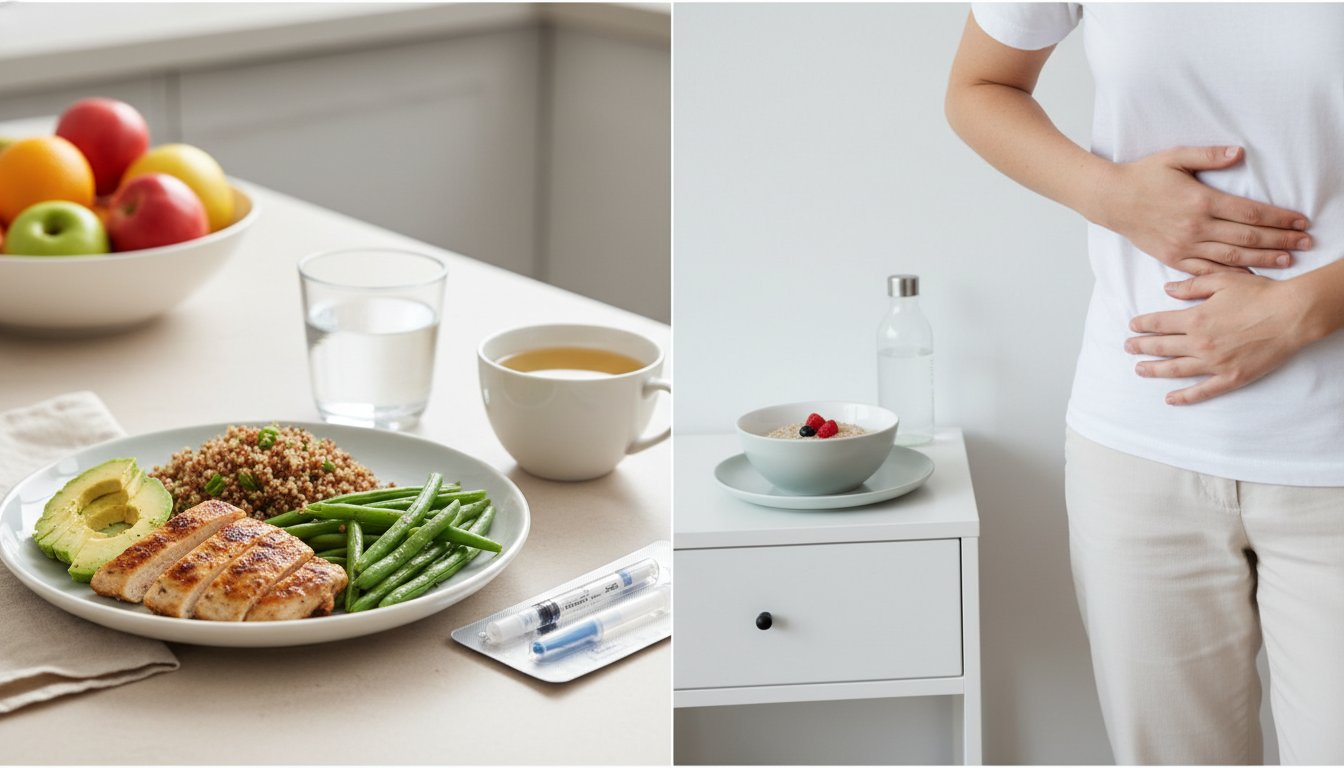
Nausea is the side effect that most patients on GLP-1 treatment report — in the STEP 1 studies (Wilding et al., NEJM 2021, n=1,961), roughly 44% of participants experienced nausea during the first 20 weeks. It is easy to interpret it as a sign that something is wrong. But in most cases it’s a matter of the stomach emptying more slowly than before, and the right food at the right time can make all the difference.
This article provides concrete advice on food glp-1 nausea — what you should eat, when you should eat it, and which foods make symptoms worse. The advice applies regardless of whether you are taking semaglutide (Ozempic, Wegovy), tirzepatid (Mounjaro) or another preparation in the same drug class.
Medical review: The article has been reviewed by an endocrinologist with clinical experience in GLP-1 treatment. Always contact your prescribing doctor or pharmacist before changing your treatment.
—
Why GLP-1 causes upset stomach and what it means for your food choices
GLP-1 receptor agonists slow gastric emptying — food stays in the stomach significantly longer than normal. It is precisely that mechanism that contributes to the feeling of satiety and weight loss. The downside is that if you eat too much, too much fat, or too fast, the food literally can’t move forward at a normal rate. The pressure in the stomach rises and the nausea increases.
Studies of tirzepatid (SURMOUNT-1, Jastreboff et al., NEJM 2022, n=2,539) showed that gastrointestinal side effects were most severe during the de-escalation phase, suggesting that the body gradually adapts. This means that dietary strategies during the first 4–8 weeks are extra important.
Practical consequences for food management:
-
Portion size is the single most important factor. A plate that felt normal last month can now trigger nausea in 20 minutes.
-
Fat content further prolongs gastric emptying — a hamburger with 40 g of fat stays up to twice as long as a lean fish fillet meal.
-
Eating pace plays a role: fast eating and air in the stomach aggravates nausea in the majority of patients.
-
Timing relative to the injection determines a lot — most people report that the nausea is at its strongest 6–12 hours after the injection.
If you understand these mechanisms, it is easier to see why the dietary recommendations look the way they do — they are not arbitrary, they follow the physiology of the stomach.
—
30 foods that work well in GLP-1 therapy
Knowing exactly what eating wegovy or Ozempic treatment is all about is one of the most common questions in the clinic. The list below is based on easy, protein-rich, low-fat options that won’t overwhelm an already sluggish stomach.
Protein sources and dairy
Lean protein is the backbone of the diet during treatment. It satisfies for a long time without significantly burdening the stomach, and it protects muscle mass when the body loses weight.
-
Boiled chicken breast
-
Thawed cod or haddock
-
Eggs (poached or hard-boiled)
-
Cottage cheese (1% fat content)
-
Greek yogurt, natural 0%
-
Tofu, firm version
-
Whitefish like hook and tough
-
Lightly trimmed salmon (in small portions)
-
Quark
Vegetables and root vegetables
Cooked and steamed vegetables are better tolerated than raw food. Fiber is important, but heavy raw shredded cabbage or large raw lettuce leaves can feel overwhelming for many in the first few weeks.
-
Steamed broccoli
-
Boiled carrot
-
Zucchini (without skin in case of sensitive stomach)
-
Spinach, lightly steamed
-
Cauliflower, pressed or mashed
-
Sweet potatoes, baked without butter
-
Asparagus, grilled or boiled
-
Turnip, mashed
Carbohydrates and whole grains
-
Oatmeal (boiled)
-
Wholemeal bread in thin slices
-
Cooked raw rice or basmati rice (refrigerated for resistant starch)
-
Quinoa, cooked
-
Cooked whole wheat pasta (al dente, in small quantities)
-
Rye crackers
Fruit and other
-
Banana (ripe but not overripe)
-
Applesauce without added sugar
-
Melon in pieces
-
Smoothie with berries and quark (the portion size determines)
-
Ginger tea with lemon (relieves active nausea)
-
Salted rice crackers (easily digestible carbohydrate in case of acute nausea)
The fatty and heavily seasoned options — cheese, cream sauces, fried meats, fried foods — should be severely limited during the ramp-up phase. It is not a permanent restriction; most patients can reintroduce them in moderate amounts when the dose stabilizes.
—
This is how you plan meals around the time of the injection
Timing is key when it comes to ozempic nausea and mounjaro upset stomach. Semaglutide and tirzepatide are usually injected once a week, but the active period in the body extends throughout the week. Nevertheless, many experience a “peak” of side effects in the first 24-48 hours.
The evening before and on the day of the injection
Take the injection on a fixed weekday schedule — for example, every Sunday evening. Eat an early, light dinner before the injection: a portion of boiled fish with mashed sweet potatoes and steamed broccoli is a practical example. Avoid alcohol and fatty foods. Make sure you are well hydrated.
The day after the injection, you should expect your stomach to be at low speed. Breakfast can advantageously be oatmeal with a small amount of ripe banana, without added fat. Lunch and dinner are kept light — think half normal portions and at least 5 hours apart.
Other days of the week
Towards the end of the week, when the “peak” of the injection has subsided, most people tolerate normal portions better. Take advantage of these days for a little more varied eating and to build up your protein intake if you had difficulty reaching your goal in the first few days.
A rule of thumb to take with you: never eat more than you are hungry for. It sounds obvious, but GLP-1 can reduce hunger signals so much that there is a temptation to test the limits — “I’m not even hungry, maybe I can eat a little more anyway?” It is precisely this pattern that most often leads to acute nausea.
—
Common mistakes that worsen nausea with GLP-1 therapy
Many of the upset stomachs patients experience are not unavoidable side effects — they are due to diet-related mistakes that are entirely avoidable.
Drinking large amounts of liquid directly with food is one of the most underrated mistakes. Liquid and food compete for space in a stomach that is already slowly emptying. Drink 30 minutes before the meal or 45 minutes after — not until.
Caffeine on an empty stomach early in the morning is another common problem. Coffee stimulates acid production and can trigger nausea when the stomach is sensitive. Eat something small — even a couple of rice crackers — before coffee.
Glp-1 food tips also include avoiding foods with a high FODMAP profile during the escalation phase: onions, garlic, legumes and beetroot-sweetened beverages can create an uncomfortable combination with the drug’s effects on bowel motility.
Paradoxically, skipping meals is also a mistake. If you think that “if I don’t eat I don’t feel sick”, you miss the fact that an empty stomach can create just as much heartburn and nausea as an overfull one. Regular, small meals keep acid levels even.
—
Frequently asked questions about food and GLP-1 nausea
Can I eat normally if I don’t feel nauseous? Absence of nausea is not a sign that you can increase the portion size freely. GLP-1 slows emptying whether you notice it or not. Eat at 70-80% of normal portion size and increase gradually if you do not experience symptoms. It protects you against sudden episodes.
How long does nausea last during Wegovy treatment? In the STEP 2 study (Davies et al., Lancet 2021, n=1,210), most patients reported that nausea significantly decreased after weeks 8–12 and was minimal at week 20. The de-escalation phase is therefore the critical period — most patients experience clear improvement when the dose is stabilized.
Is ginger a proven remedy for nausea during GLP-1 treatment? Ginger’s active substance gingerol has been shown to be effective against nausea in several clinical contexts, including during pregnancy and chemotherapy. There are no randomized studies specifically on GLP-1 patients yet, but ginger tea and ginger tablets are used clinically as supplements and are well tolerated. Consult your doctor if the nausea is severe.
Do I need to eat differently on Mounjaro compared to Ozempic? Tirzepatid activates both GLP-1 and GIP receptors, producing slightly stronger gastrointestinal effects during de-escalation compared to semaglutide according to SURMOUNT-1 data. The basic principles of the diet are the same: small portions, low fat, regular meals — but you may need to be extra careful the first 4-6 weeks on Mounjaro.
Can I drink alcohol during the treatment? Alcohol further slows gastric emptying and can significantly increase nausea. There is also a risk of low blood sugar in diabetic patients who combine GLP-1 with other drugs. During the escalation phase it is recommended to avoid alcohol completely; thereafter in very moderate amounts and always in conjunction with food.
Does it matter if I inject in the morning or in the evening? The timing affects when the side effects peak. Many patients prefer evening injection because possible nausea occurs during the night when they sleep. It’s not a clinical requirement — choose the time that gives you the best sleep quality and that you can keep consistently week after week.
.entry-content