Creatine: complete guide to dosage, effects and results
23 Mar
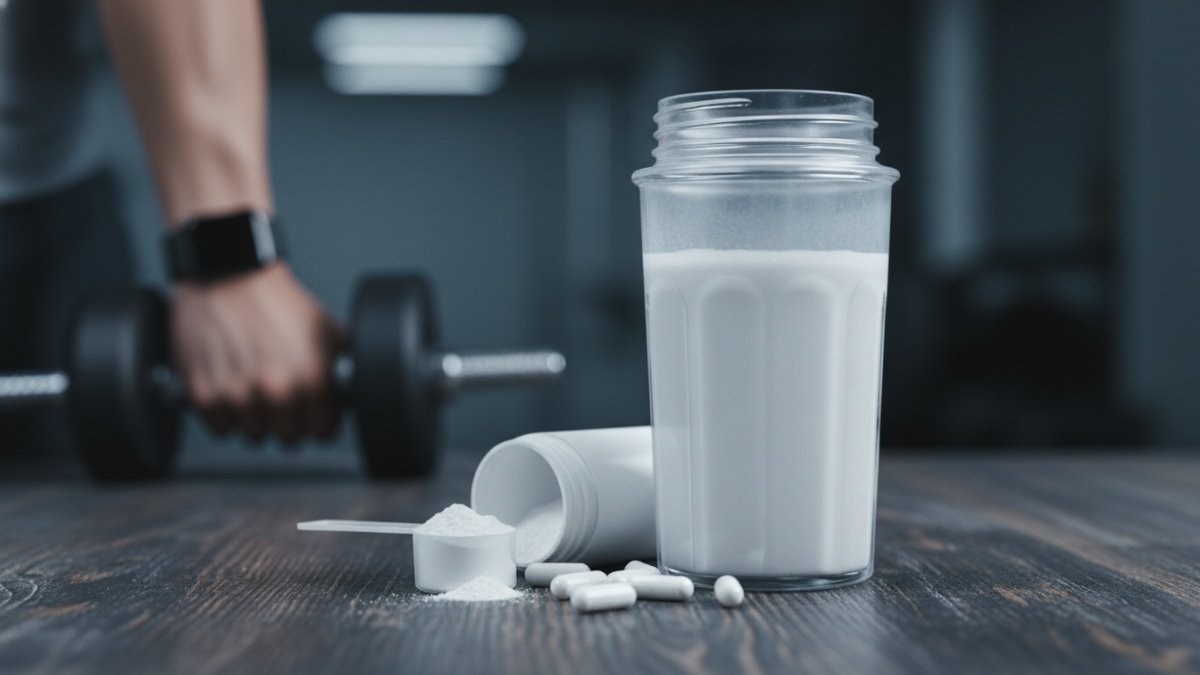
Creatine is the most studied supplement in sports nutrition — and one of the very few that consistently delivers measurable results in controlled studies. Despite decades of research and hundreds of published studies, myths about kidney damage, hydroedema, and “cheating” still circulate. The reality is more nuanced and significantly more positive. Here we go through exactly how creatine works, which dosage gives the best results, which side effects actually exist and what you should consider when choosing a product.
How does creatine work in the muscles — and why does it give more strength?
Creatine is a naturally occurring substance that the body produces in the liver, kidneys and pancreas — about 1-2 grams per day. The rest comes from the diet, mainly red meat and fish. In the muscle cells, creatine is stored as phosphocreatine, which acts as a quick energy reserve for short, intense efforts.
During the first 5-10 seconds of maximal effort — a heavy deadlift repetition, a sprint, an explosive jump — muscles use ATP (adenosine triphosphate) as an energy source. ATP is broken down to ADP (adenosine diphosphate) and releases energy. The problem? The ATP stores only last for a couple of seconds. This is where phosphocreatine steps in: it donates its phosphate group to ADP and regenerates ATP, giving the muscles another 5-10 seconds of fuel.
With supplementation, the amount of stored phosphocreatine in the muscles increases by 20-40%. In practical terms, this means 1-3 extra repetitions per set for heavy lifting, faster recovery between sets and better capacity for repeated short sprints. Over weeks and months, these margins add up to more total training volume — and more volume means more muscle adaptation.
What effects does creatine have beyond pure strength?
The research has expanded beyond the gym. A meta-analysis published in the Journal of the International Society of Sports Nutrition (2023) summarized creatine’s effects in over 500 studies:
-
Strength and Power — average 5-10% increase in maximum strength (1RM) during the first 4-12 weeks of supplementation.
-
Muscle mass — 1-2 kg increase in the first months, partly through water retention in the muscle cells (cell volumization) and partly through increased protein synthesis thanks to higher training volume.
-
Cognitive function — several studies show improved short-term memory and mental endurance, especially under sleep deprivation and stressful conditions. The effect is more pronounced in vegetarians/vegans who have lower basal creatine levels.
-
Recovery — reduced muscle damage and inflammation after intense exercise, as measured by lower creatine kinase levels in the blood.
These results apply to creatine monohydrate — the form used in almost all studies. Other forms (creatine HCL, creatine ethyl ester, buffered creatine) are marketed as “better” but lack convincing comparative data showing an advantage over monohydrate.
It is also worth mentioning that creatine is not a stimulant. It doesn’t raise the heart rate, doesn’t cause jitters, and doesn’t disrupt sleep — unlike caffeine or pre-workout products. This makes creatine one of the few performance-enhancing supplements that can be taken year-round without developing tolerance or needing a break. The International Society of Sports Nutrition (ISSN) classifies creatine monohydrate as “clearly safe and effective” and recommends it as a first-line supplement for athletes looking to improve their performance.
Creatine dosage — loading phase, maintenance dose and timing
The dosage of creatine follows one of two protocols. The loading protocol involves 20 grams per day (divided into 4 doses of 5 grams) for 5–7 days, followed by a maintenance dose of 3–5 grams daily. The advantage? The muscle layers are quickly saturated and the full effect is achieved within a week. The downside? Some experience stomach upset and water retention during the loading phase.
The alternative is to skip the loading and go straight to 3-5 grams per day. The muscle layers saturate after 3-4 weeks instead of one — but the end result is identical. Most researchers and experienced trainers recommend the lower dose from the start, unless you have a specific reason to want maximum effect immediately (for example, before a competition in 1-2 weeks).
Timing has surprisingly little significance. A 2013 study (Journal of the International Society of Sports Nutrition) compared creatine before vs. after exercise and found a slight advantage for taking it after exercise — likely because muscle cells are more receptive to uptake immediately after activity. However, the difference was small. The most important thing is to take it daily, not when you take it.
Creatine and water are related. Creatine draws water into the muscle cells, and insufficient water intake can lead to cramps and dehydration. The recommendation is to increase fluid intake by at least 0.5 liters per day in addition to normal intake during supplementation.
Creatine side effects — myths vs reality
The alleged side effects of creatine have been extensively researched, and most are found to be exaggerated or completely unfounded. Here’s what the research actually says:
Weight gain (1–2 kg) in the first few weeks is due to water retention in the muscle cells — not fat storage. This weight gain stabilizes after 2–4 weeks and is reversible if supplementation is stopped. For those who strive for pure muscle mass rather than the number on the scale, this effect is desirable.
Kidney damage — the most widespread myth. A systematic review published in the European Journal of Nutrition (2023) analyzed data from 35 studies with a total of over 5,000 participants and found no evidence that creatine at recommended doses (3–5 g/day) damages the kidneys in healthy individuals. Creatinine (a breakdown product of creatine) does rise in the blood, but this reflects increased creatinine intake — not reduced kidney function. However, patients with existing kidney disease should consult a doctor.
Stomach upset may occur with high single doses (>10 grams), but is easily avoided by dividing the dose. At a normal maintenance dose (3–5 g), stomach upset is uncommon.
Hair loss — a 2009 study showed elevated DHT levels in rugby players who took creatine during the loading phase. The results have not been replicated in subsequent studies, and the link between creatine and hair loss remains speculative. Anyone with a strong genetic predisposition to male pattern baldness should be aware of this uncertainty, but the evidence is not sufficient to advise against it.
Cycling (taking a break from supplementation) is sometimes marketed as necessary, but lacks scientific support. Creatine’s effect depends on saturated muscle stores, and a break means that stores are depleted and need to be replenished. Continuous supplementation with 3–5 g/day is the most effective and studied protocol for long-term use.
Best creatine — which should you choose from all the products?
Creatine monohydrate is the only obvious choice. The supplement industry sells alternative forms with a higher price tag and worse evidence. Here is a simple guide to filter the market with:
Creapure certified creatine monohydrate is manufactured in Germany with documented purity (>99.9%). The cost is marginally higher but provides reassurance that the product does not contain impurities such as dicyandiamide or dihydrotriazine, which can be found in cheaper Chinese productions.
Microparticulated creatine (micronized) dissolves better in water and gives less graininess — an advantage for those who mix in shakes. Effectively, it is identical to regular monohydrate. The price should be around SEK 150–300 per kilogram for pure creatine monohydrate of good quality. If you pay more than SEK 500 per kilo without Creapure certification, you are probably paying for marketing.
Vegetarians and vegans often have lower basal creatine levels in the muscles, as the diet lacks the most important creatine sources (red meat and fish). This group typically sees greater percentage increases in strength and muscle mass when supplemented compared to carnivores — an observation confirmed in multiple studies since 2003. If you train on a plant-based diet, creatine is one of the most justified supplements you can take.
Avoid products with “proprietary blends” that hide exact amounts. A good creatine product contains exactly one ingredient: creatine monohydrate. Flavoring, sweeteners and fillers add cost without benefit. Do you want to maximize your training even further? Our guide to the best SARMs for the gym discusses other performance-enhancing supplements, and our article on how to increase your metabolism explains how creatine fits into the metabolic puzzle.
.entry-content