Anadrol (Oxymetholone): Effects, dosage, course and side effects
Anadrol (Oxymetholone): Effects, dosage, regimen and side effects
08 Apr
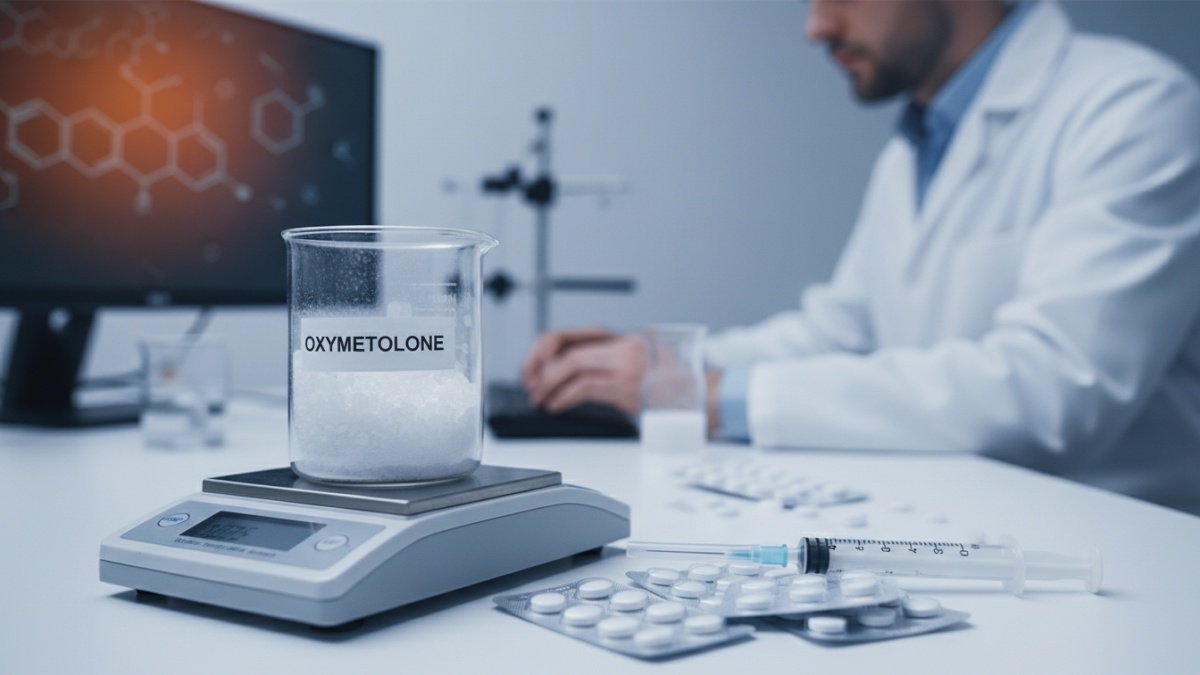
Anadrol is consistently ranked as the strongest oral steroid on the market. With an anabolic rating of 320 and androgenic rating of 45, oxymetholone delivers mass gains that few other substances can match in the same time period. It is precisely that combination — extreme muscle-building ability and fast action — that causes many strength trainers and bodybuilders to seek information about how the substance works, what risks it entails and what a rational plan looks like.
This article goes over everything you need to understand about anadrol: the pharmacology behind its effects, realistic dosage ranges, what a typical regimen looks like, and what side effects you’re actually at risk of. The information is based on clinical literature and documented experience — not marketing.
How oxymetholone works and what you can expect from anadrol effect
Oxymetholone is a synthetic dihydrotestosterone (DHT) derivative originally developed in the 1960s for the treatment of anemia and muscle-wasting diseases. The DHT structure means that the substance cannot be aromatized to estrogen via the aromatase enzyme — a feature that distinguishes anadrol from testosterone and nandrolone.
Even so, many users show clear estrogenic symptoms: water retention, gynecomastia and mood swings. Research suggests that oxymetholone activates estrogen receptors directly, without actually being converted. This makes the estrogen problem more complicated to manage, as standard tools such as aromatase inhibitors (AIs) have limited efficacy. SERMs such as tamoxifen can suppress receptor activity but do not completely eliminate the problem.
The primary mechanism of action driving the mass gain is threefold:
-
Strongly increased nitrogen retention in muscle tissue, which drives protein synthesis
-
Stimulation of erythropoietin (EPO), which increases red blood cells and oxygen transport to the muscles
-
Increased IGF-1 production which enhances recovery and anabolism
In practice, most users of anadrol notice effects already after 5-7 days. Weight and strength gains of 8–15 kg over a 4–6 week cycle are well documented, but a significant portion of the initial weight gain consists of intracellular fluid and glycogen. Lean muscle mass is better preserved when the regimen is combined with sufficient calorie intake and sufficient protein — at least 2 g per kg of body weight daily.
Anadrol dosage — 50 mg, 100 mg and what the research says
The standard range of anadrol 50 and escalation
Anadrol 50 refers to the most common tablet dose: 50 mg per tablet. Clinical studies have investigated doses between 1–5 mg per kg of body weight per day, but in practice, rational regimens range within a much narrower range.
For beginners with anadrol, 50 mg/day is an accepted starting dose. It provides measurable anabolic response without directly maximizing hepatotoxicity. More experienced users who have tried the substance before sometimes choose 100 mg/day, which in studies has been shown to give proportionally increased muscle protein effects but with an exponentially worse risk-benefit ratio.
Doses above 100 mg/day are not recommended even in performance-oriented contexts. Studies on HIV/AIDS patients showed that 150 mg/day did not provide a significantly better muscle mass effect compared to 100 mg/day, while liver damage increased significantly. It is a telling result: more anadrol is not linearly more effective, but it is linearly more toxic.
Daily distribution and timing
The half-life of oxymetholone is approximately 8–9 hours. This means that one dose a day may technically work, but splitting it into two doses — morning and evening — provides more even plasma levels and reduces spikes that burden the liver on a single occasion. Many choose to take the dose in conjunction with food to reduce the nausea that the substance can cause on an empty stomach.
Anadrol regimen — scheme, duration and combinations
A well-planned anadrol regimen rarely lasts longer than 4–6 weeks. That’s the time frame where the benefit-risk balance is still acceptable — longer regimens don’t add proportionally more muscle mass but significantly increase the risk of liver damage, blood pressure problems, and lipid changes.
Anadrol is used almost exclusively as a “kick start” in longer regimens based on injectable steroids. The setup typically looks like this: oxymetholone is taken week 1–4 or 1–6 while a long-acting testosterone ester (eg testosterone enanthate or cypionate) is built up to therapeutic levels in the blood. Once the testosterone is active, the anadrol phase ends, and the injectable base continues.
There are a couple of combinations that appear in the documentation:
-
Testosterone enanthate + anadrol: The most common combination. Testosterone partially counteracts the libido reduction that can occur with oxymetholone alone and provides a stable anabolic base.
-
Anadrol as the only oral: Occurs in shorter massage courses in 4 weeks. Requires careful PCT planning afterwards.
Regarding liver load during anadrol regimen, some absolute guidelines apply: avoid alcohol completely during the entire regimen, avoid paracetamol and other hepatotoxic substances, and use liver protective supplements. UDCA (ursodeoxycholic acid) at 500–1000 mg/day and NAC (N-acetylcysteine) at 600–1200 mg/day have some support in the literature for limiting ALT/AST elevation during oral steroid use. Liver enzymes should be checked with blood tests before the course and at approximately week 4.
Anadrol side effects — what actually happens in the body
Liver toxicity and how it is measured
Oxymetholone is a 17-alpha-alkylated (17aa) preparation, which means that it has been chemically modified to survive passage through the liver when taken orally. That modification is what makes the tablet form functional — and what makes the substance hepatotoxic.
Hepatotoxicity manifests itself in elevated liver enzymes (ALT and AST), which in most cases normalize within 4–8 weeks after the end of the course in otherwise healthy individuals. In rare cases — especially with longer courses, high doses or existing liver problems — peliosis hepatis (blood cysts in the liver) and hepatocellular carcinoma have been documented. These are serious conditions, and the risk justifies why 4–6 weeks is used as the maximum limit.
Jaundice (icterus) is a warning sign that requires immediate withdrawal and medical contact. Dark urine and light stools combined with fatigue and discomfort in the right upper quadrant of the abdomen are signals that should not be ignored.
Cardiovascular impact and blood pressure
Anadrol side effects on the heart and vascular system are significant. The substance lowers HDL cholesterol sharply — sometimes by 40-50% — and raises LDL. The combination creates an unfavorable lipid profile that increases the risk of atherosclerosis, especially with repeated courses over time.
Blood pressure rises in most users, partly due to fluid retention and partly via direct vascular mechanisms. Systolic pressures of 150–160 mmHg are common without active management. Daily blood pressure monitoring during the course is not excessive — it is basic accountability. If the pressure consistently exceeds 140/90, the dose should be reduced or the course should be terminated. Omega-3 fatty acids (3–4 g/day EPA+DHA) and regular cardio exercise help keep blood pressure under control, but do not replace medical assessment at elevated levels.
Other side effects to be aware of
Androgen-related side effects are less pronounced than the DHT structure suggests, but do occur:
-
Hair loss with genetic predisposition to androgenetic alopecia
-
Acne, especially on the back and shoulders
-
Prostate enlargement with prolonged use in elderly users
In women, anadrol is inappropriate at almost all doses because of the risk of virilization — deepening of the voice, clitoral enlargement, and menstrual disturbances occur quickly and are partially irreversible.
Psychological effects include initially improved well-being and aggressiveness in exercise, but mood swings, irritability and sleep disturbances are reported with longer or higher dose use. Appetite increase is pronounced for most people, which can be beneficial in a mass diet but troublesome for those who do not plan their calorie intake.
What happens after the course — recovery and HPTA suppression
Oxymetholone effectively suppresses the hypothalamic-pituitary-gonadal axis (HPTA). This means that the body’s endogenous testosterone production is shut down during the course. How quickly it recovers depends on course length, total hormone levels and individual biology.
After a stand-alone 4-week course of anadrol alone, HPTA recovery can be expected within 6–12 weeks without intervention, but stimulation with SERMs (clomiphene citrate or tamoxifen) accelerates the process and reduces the risk of loss of course gains. A typical regimen begins 3–5 days after the last anadrol tablet and runs for 4–6 weeks.
In combination courses with long-acting injectable steroids, PCT is instead started 2–3 weeks after the last injection — not after the last oral tablet — because the injectable esters are active in the blood longer.
The muscle mass that was actually dry — that is, protein supplements without excess fluid — is largely maintainable if exercise, diet and recovery are managed correctly after the regimen. Realism is important here: out of 12 kg of total weight during the course, 4-6 kg can be water and glycogen, which will disappear within weeks after the end. This is normal and expected, not a sign that the regimen was unsuccessful.
Blood values should be checked 6–8 weeks after the end of the course: liver enzymes, lipid profile, hematocrit and testosterone. Persistent deviations in these values are an argument for waiting longer before any next course — the standard recommendation “time on as time off” has some support in the logic of organ recovery, although the exact optimal interval lacks clinical consensus.
Anadrol is a substance with documented effects and documented risks. The information above gives you the basis to understand the mechanisms, plan realistically and manage the risks with open eyes — it is each person’s own responsibility to weigh that decision.
.entry-content